The Kitchen
Tandoor & Tradition
Three gestures, repeated for centuries, that still make the food worth waiting for.
At Zaōq, the cooking is not a performance. It is a practice. We work with fire, steam and smoke the way the old kitchens did - because there is no shortcut that gives the same result.
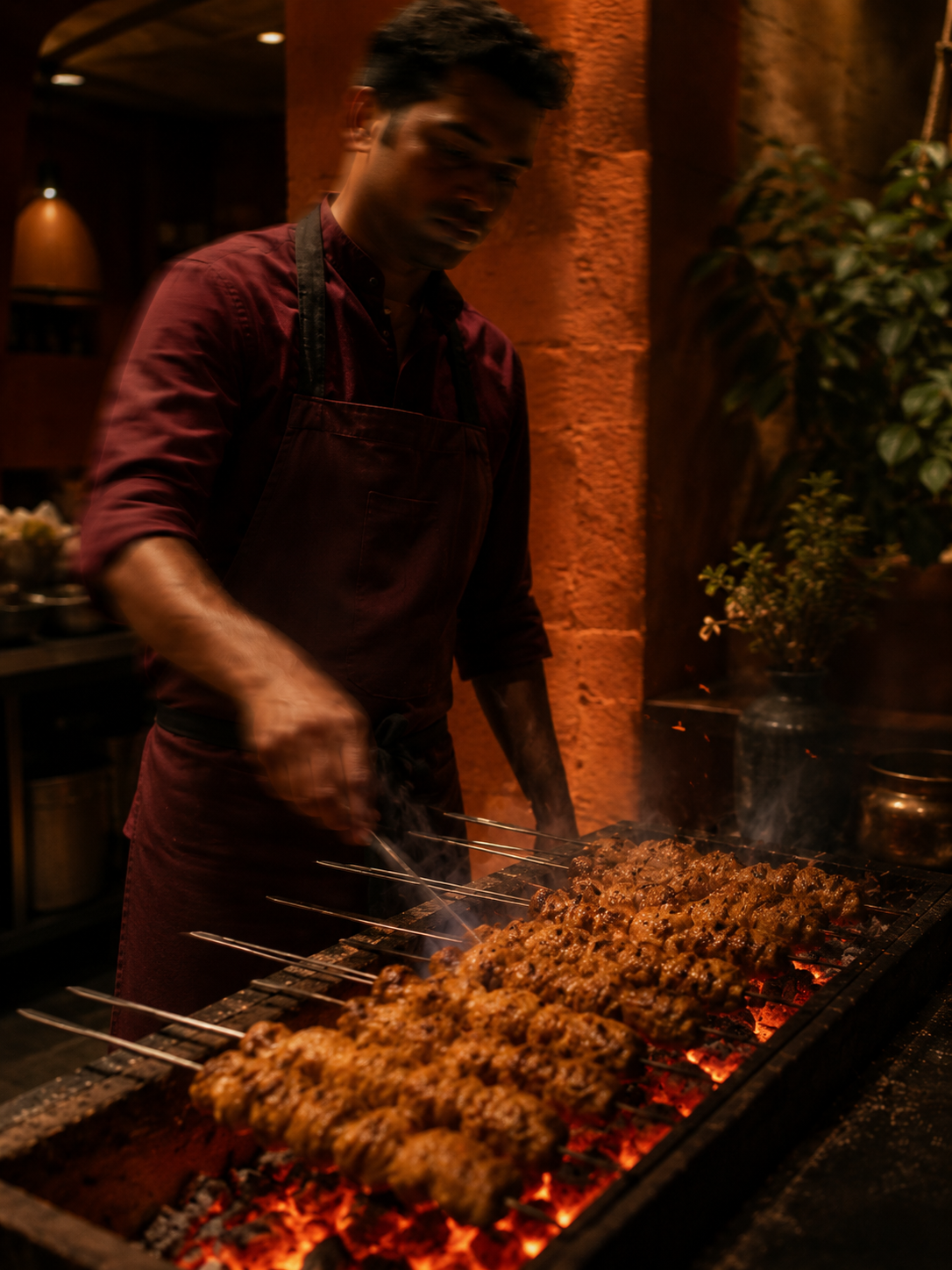
Direct sear, white-hot clay tandoor.
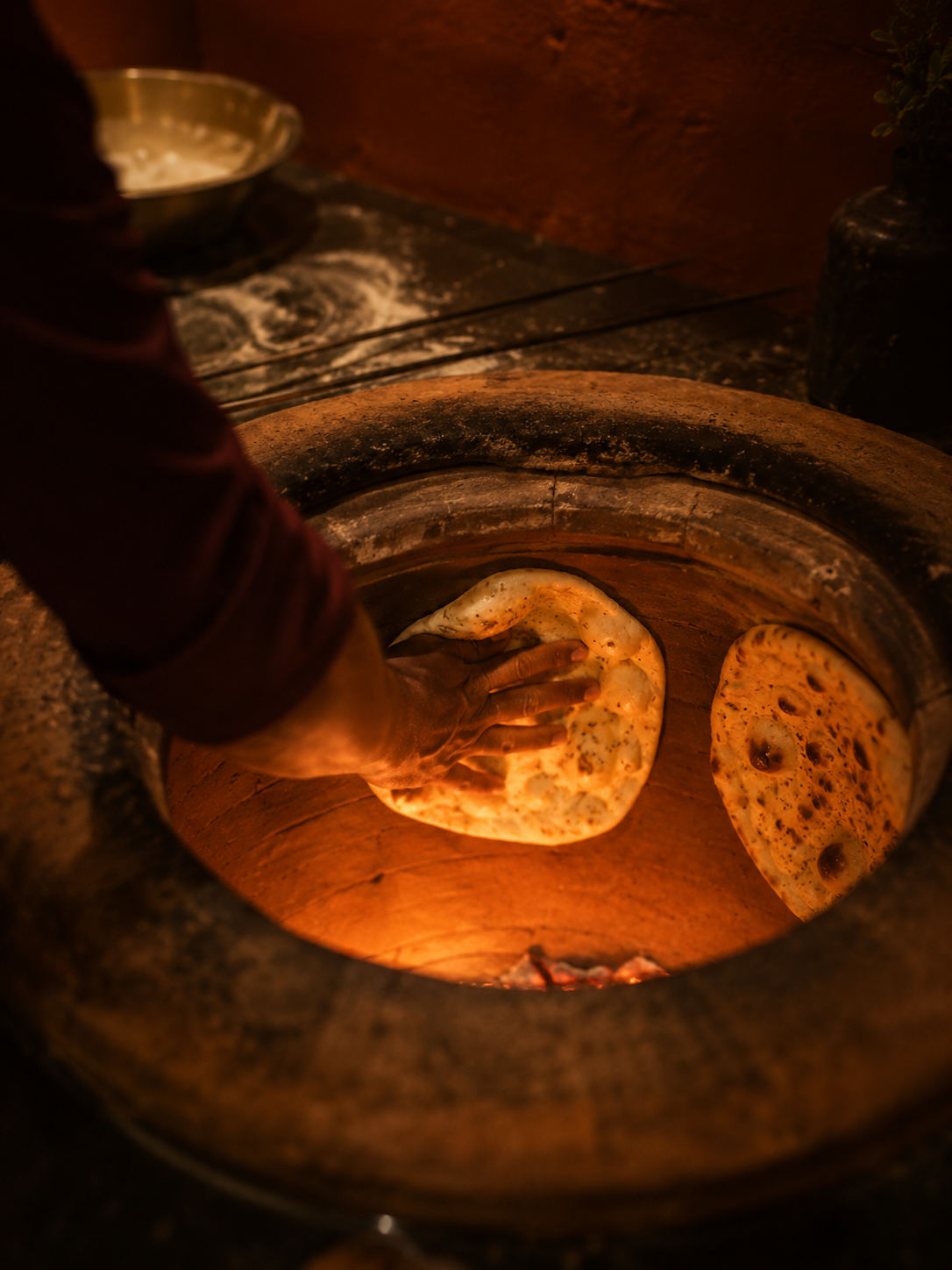
Aatish is the first and most visible fire. The tandoor is heated until the clay walls glow white, until the air above the mouth shimmers and you cannot hold your hand there for more than a second.
Onto those walls we press naan. Onto skewers we thread sheekh kebabs, malai tikka, murgh chargha, paneer angaara. The meat sears instantly, sealing the juices inside, while the fat and marinade drip onto the glowing coals below and rise back up as smoke.
This is why tandoori food tastes of charcoal and caramel at once: the outside is charred by direct heat, the inside is cooked by the radiant air. The cook must know the tandoor's mood - some spots are hotter, some cooler, and the skewer must be turned at the right moment. There is no thermometer for this. There is only practice.
The white heat that sears, seals, and smokes.
Quiet exhale of steam beneath a flour seal.
Dum is the opposite of aatish. Where the tandoor attacks, dum coaxes. A handi of rice and meat is layered with fried onions, saffron water, rose petal, and kewra. The pot is sealed with a rope of dough, trapping every drop of steam inside.
The heat is low and patient. The biryani does not boil; it steams in its own perfume for hours. When the seal is broken at the table, the steam rises in a single fragrant exhale. The grains are separate, the meat is falling apart, and the fat has melted into every layer.
Dum is also the technique behind our kormas and salans. A slow simmer beneath a lid, with the oil carefully skimmed and the spices added at intervals so each one releases its oil at the right temperature. The result is depth without heaviness, richness without dullness.
Steam, patience, and the sealed perfume of spice.
Caramelized wood-smoke and saffron milk.
Mithas is the sweet end, but also the smoky one. In the Mughal kitchen, dessert was not an afterthought; it was a final course of fragrance and texture. Our phirni is set in clay cups because the earth draws heat away slowly, leaving the custard cool and dense. The kheer is finished with a pinch of saffron and a few drops of kewra.
The same fire that sears the kebabs also gives us the smoke for the final flourish. A live coal is placed in a small bowl inside a larger pot of finished korma or raan, ghee is poured over it, and the lid is sealed. The smoke settles into the fat, giving the dish a last note of caramelized wood.
Mithas is the reminder that heat is not just for cooking. It is also for finishing, for scenting, for turning a good dish into a memory.
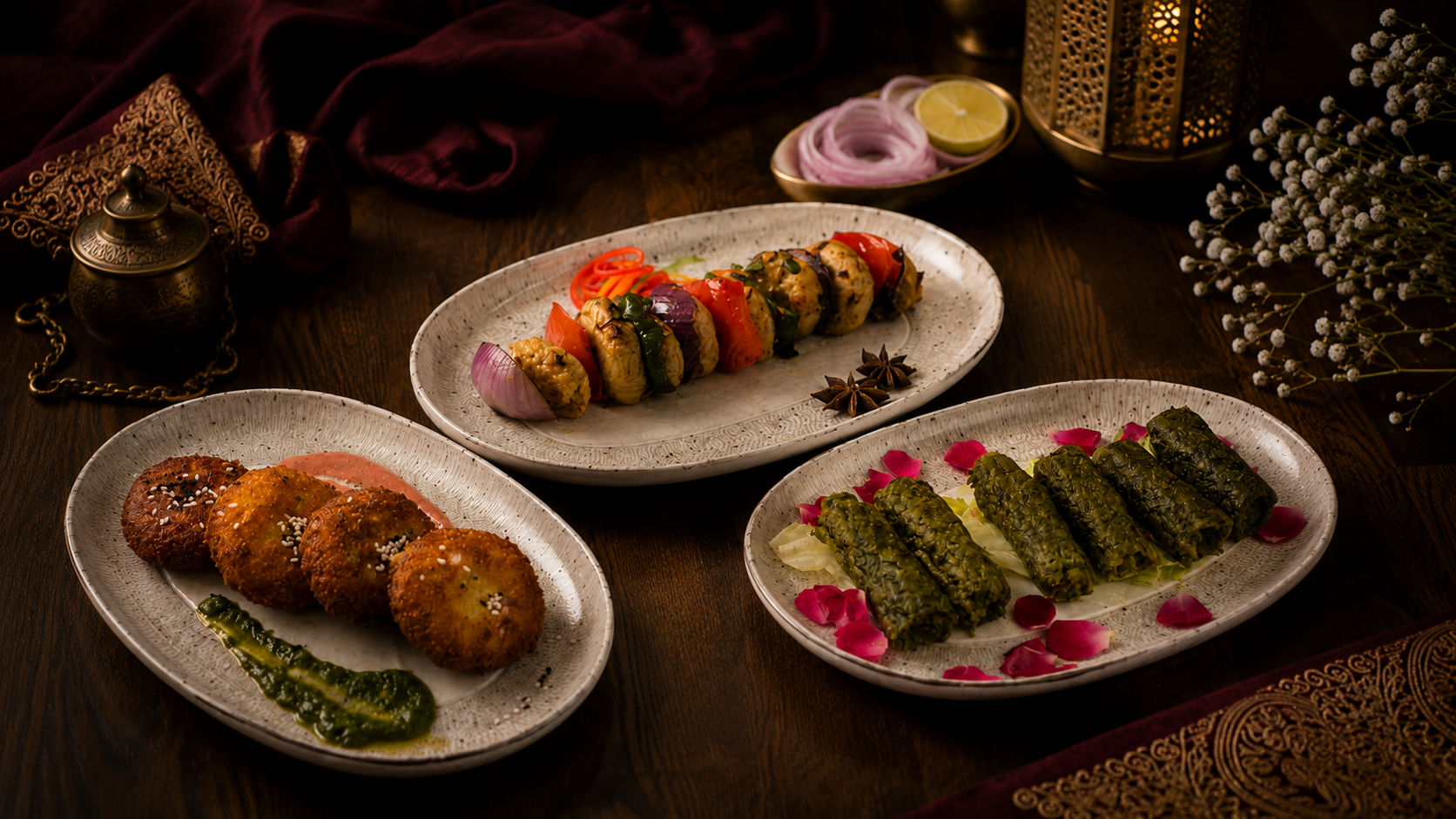
Smoke, saffron, and the last slow bite.
Three fires. One taste worth keeping.
Return to Zaōq→